 |
Overview
How to navigate and find processes within RDrive on the desktop/browser
- Purpose: How to find processes using searches and process finder
- Who It’s For: General users
Prerequisites: Able to read the item
You can search the process/checklist forms via the unified search bar on the finder page.
Via Process Finder
Step-by-Step Instructions
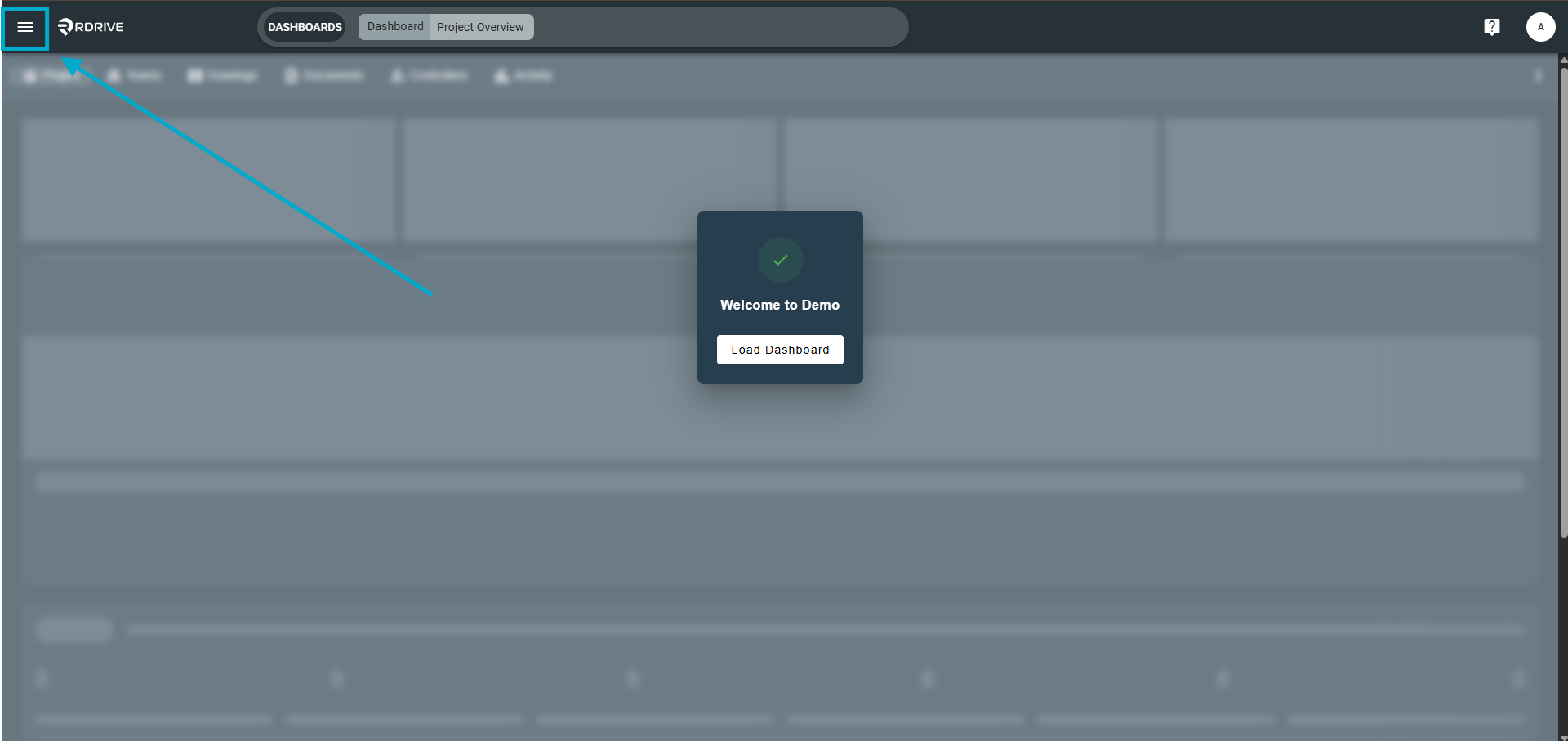
- From the main Menu icon ≡ in the top-left corner.
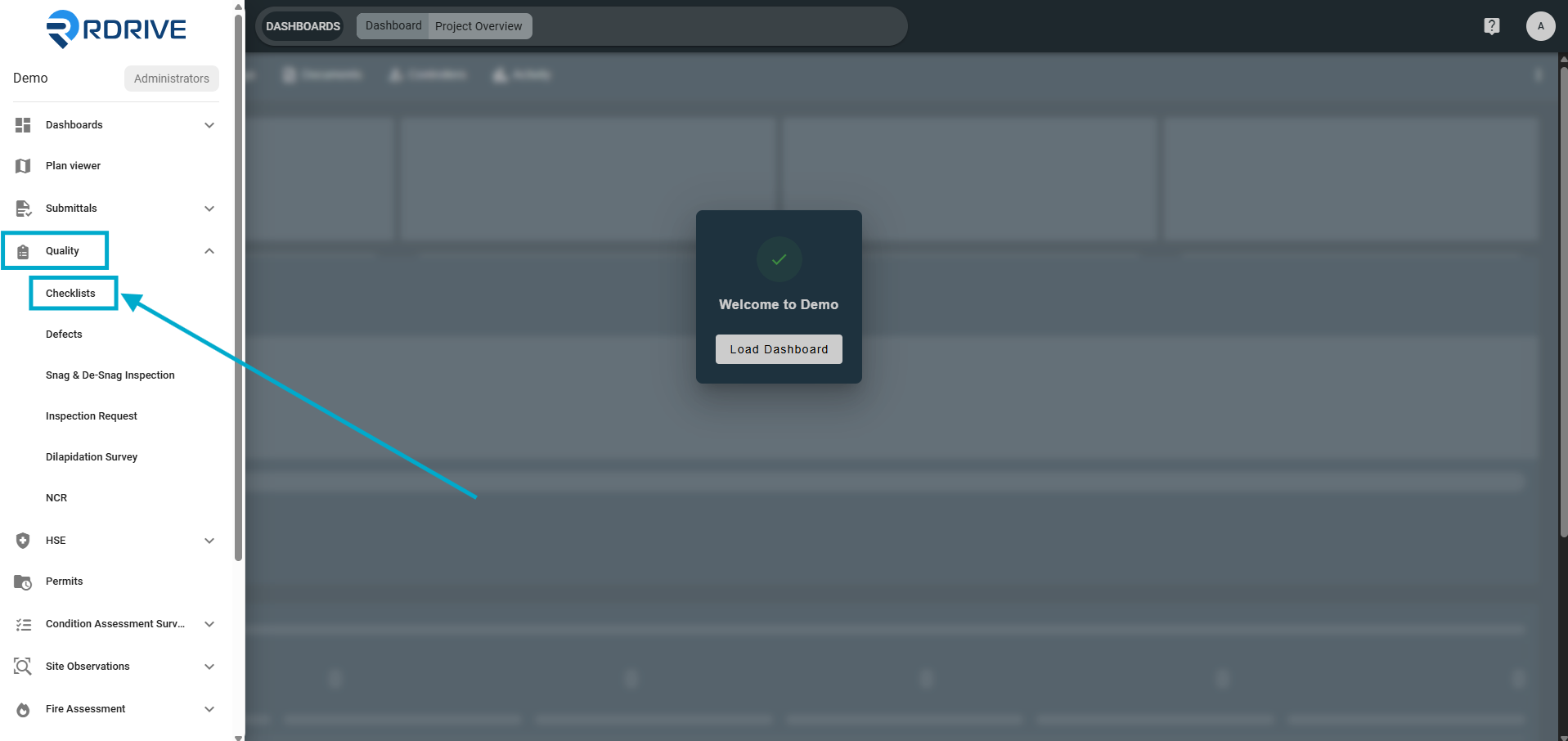
- Choose the relevant Category and Subcategory.
After selecting a category, you will see all related processes and checklists within that area.
Example:
categories may include:- Checklists
- Defects
- Snag & De-Snag Inspections
- Inspection Requests
- Dilapidation Surveys
- NCRs
In this example we will choose "Checklists"
Navigating with the Search Bar
Utilize the unified search bar at the top to locate process/checklist forms efficiently.
Apply filters based on various criteria, including:
- ID
- Location
- Discipline (profile)
- Created date range / Created by user
- Status
- Form data, etc
You can apply multiple filters as needed. When adding multiple filters with different criteria, the system shows results based on the AND relationship.
Alternatively, if you apply only one type of criteria but with different values in the same search, the system returns results based on the OR relationship.
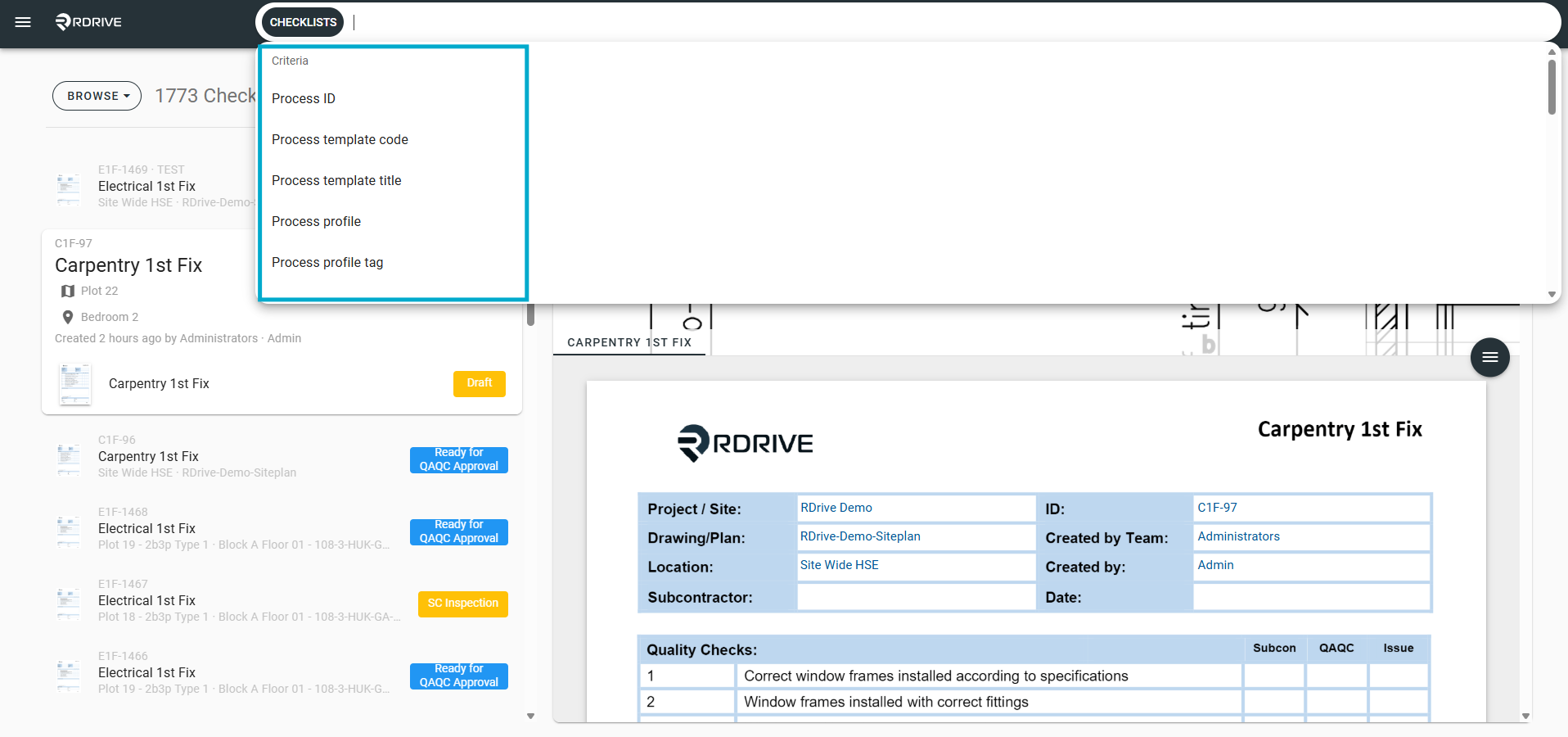
By adding multiple filters you can single out specific works meeting your required needs.
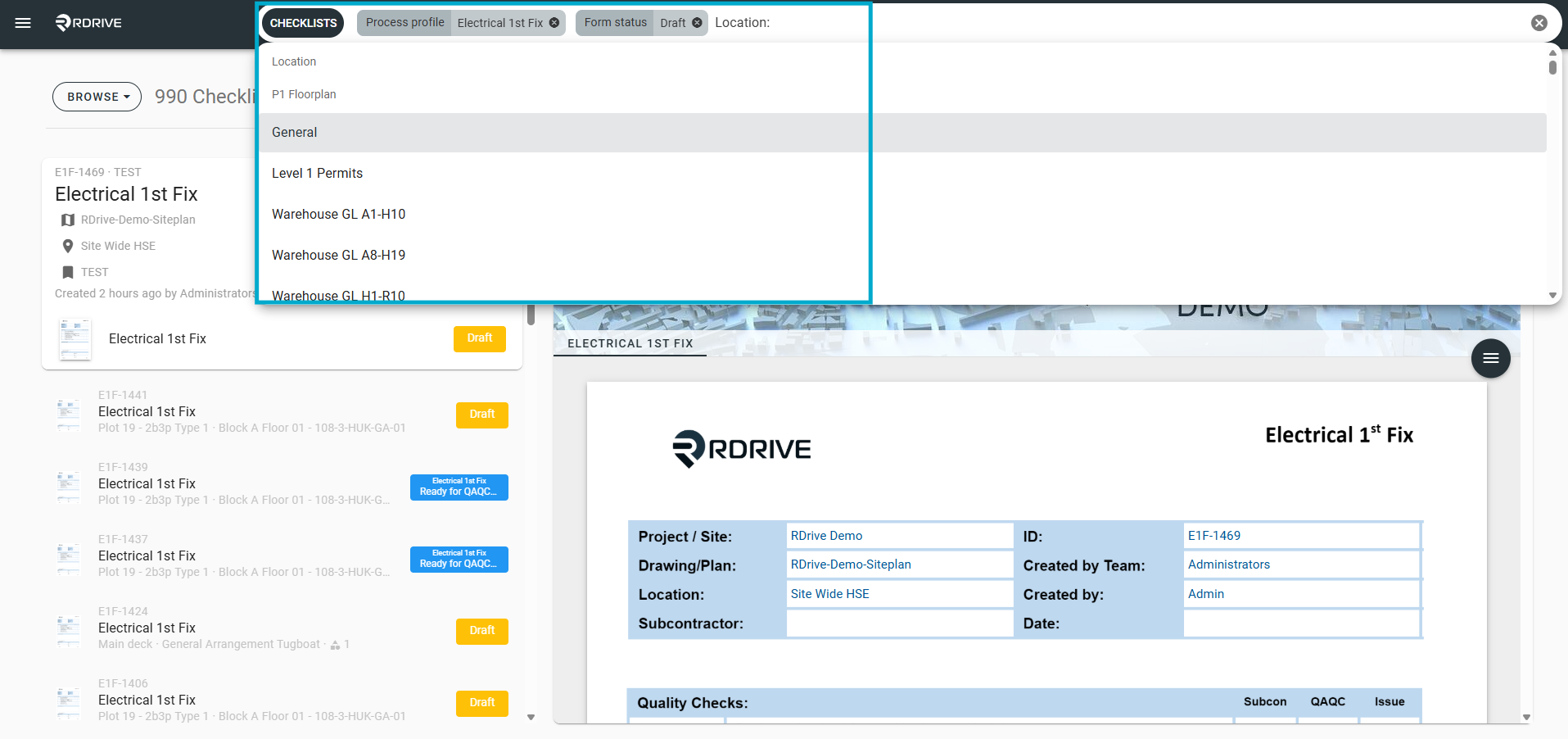
Search for a Process
Use the search bar at the top of the page to quickly find specific processes or checklists.
You can filter through many options for example:
Use the search bar at the top of the page to quickly find specific processes or checklists.
You can filter through many options for example:
- ID
- Drawing
- Location
- Discipline / Profile
- Created By
- Created Date
- Form Status
Using Multiple Filters
You can combine filters to narrow down results.
Example
Search for:
- Status = Open
- Drawing = Level 02
- Created = from 01/01/2026
RDrive will return only results matching all selected filters.
Tips
- Use filters to quickly locate specific inspections, defects, or checklists.
- Combining filters helps narrow large result sets.
- Date filters are useful for reviewing recent activity.
Was this article helpful?
That’s Great!
Thank you for your feedback
Sorry! We couldn't be helpful
Thank you for your feedback
Feedback sent
We appreciate your effort and will try to fix the article